
The hard part of a castor oil pack is rarely the castor oil. It is keeping the oil where you want it.
The usual homemade setup is a stack of flannel, a sheet of plastic wrap, and a towel you hope will stay put. It can work, but it asks a lot from a flat piece of plastic. The wrap shifts. The edges gap. The towel slides when you stand up. After a few tries, the whole routine can feel messier than it is worth.
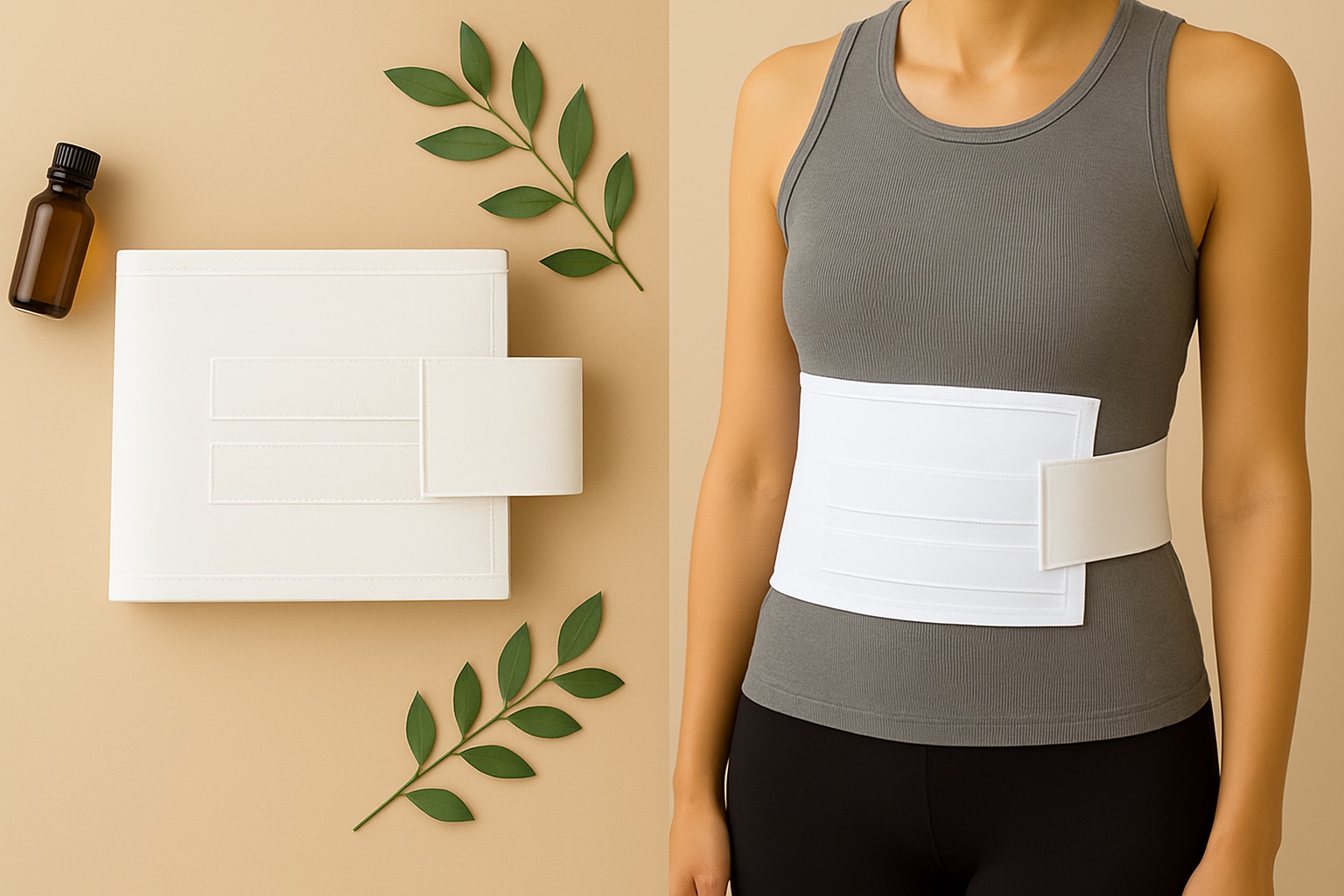
A reusable pack solves a different problem. It is not just a prettier version of the same thing. It is a small sewn object designed to hold oil, protect clothing and bedding, and stay comfortable while you rest or move around the house.
What makes a reusable pack different?
The common setup
The waterproof layer sits loose on top
The towel does the job of a strap
The edges are the first place oil escapes
Every use starts with setup and cleanup
A sewn reusable pack
The absorbent layer is built into the pack
The waterproof layer is part of the shape
The band holds it without hand-holding
It can be stored and reused as one piece
That difference sounds simple, but the details matter. A pack that is too small leaks. A pack that is too bulky feels awkward. A band in the wrong place twists. A waterproof layer treated like ordinary cotton can pucker, drag, or lose its clean shape at the edges.
The design details that matter
The absorbent layer has to hold enough oil
Too little fabric and the oil has nowhere to go. Too much and the pack becomes stiff and slow to warm. The useful range is narrower than it looks.
The waterproof layer has to do more than sit behind it
Plastic wrap fails because it is loose and flat. A sewn waterproof layer needs enough coverage to help contain the oiled fabric without making the pack bulky.
The band affects comfort more than people expect
A narrow tie can dig or shift. A wide band spreads pressure and makes the pack feel like something you can wear, not something you have to hold.
Waterproof fabric changes the sewing
PUL is soft and useful, but it does not behave exactly like quilting cotton. A few small choices while sewing make the finished pack look cleaner and lie flatter.
You can figure all of that out by trial and error. I did. But trial and error with oil, elastic, and waterproof fabric is not especially charming. This is the kind of project where a pattern saves you from the little decisions that only become obvious after the first version is already sewn.
When a pattern is worth it
A castor oil pack looks like it should be just a rectangle. In practice, the usefulness is in the proportions: how much absorbent area you need, how the waterproof layer relates to it, where the band belongs, and how the pieces come together without fighting the fabric.
That is what the Better Pack digital pattern is for. It keeps the project approachable while taking the drafting, sizing, layout, and construction sequence off your plate. You still get the satisfaction of sewing your own pack; you just do not have to invent the pack first.
What is included in the digital pattern
Printable pattern files, illustrated sewing instructions, multiple print formats, and sizing guidance for the Better Pack design.
What supplies should you use?
The short list is simple: organic cotton flannel, food-safe PUL, wide elastic, thread, and ordinary sewing tools. The quality and width choices matter more than the number of supplies.
I keep the supply list on its own page because links and availability change. It also keeps the blog post from turning into a shopping list when what you really need first is the shape of the project.
Is this a beginner project?
Yes, if you are comfortable sewing straight seams. There are no zippers, buttonholes, darts, curves, or fitted garment pieces. It is a practical project, not a fussy one.
The part that benefits from guidance is the waterproof fabric. Once you know how to handle it, the project feels much more straightforward.
Which version should I make?
The Better Pack patterns are available for liver and thyroid placement, with adult and youth options. The right choice depends on where you want the pack to sit and who will wear it. Each product page shows what comes with that download, including the available sizes and print formats.
If you sew for more than one person, the digital format is helpful. You can come back to the files, reprint what you need, and make another pack without starting from scratch.
Two good options
Sew one yourself
Choose the digital pattern if you want the reusable design, printable pieces, and instructions for making your own Better Pack.
Have one made for you
Choose a ready-made Better Pack if you want the same reusable construction without sewing it yourself.